
Scaffold Inspections and why you need them
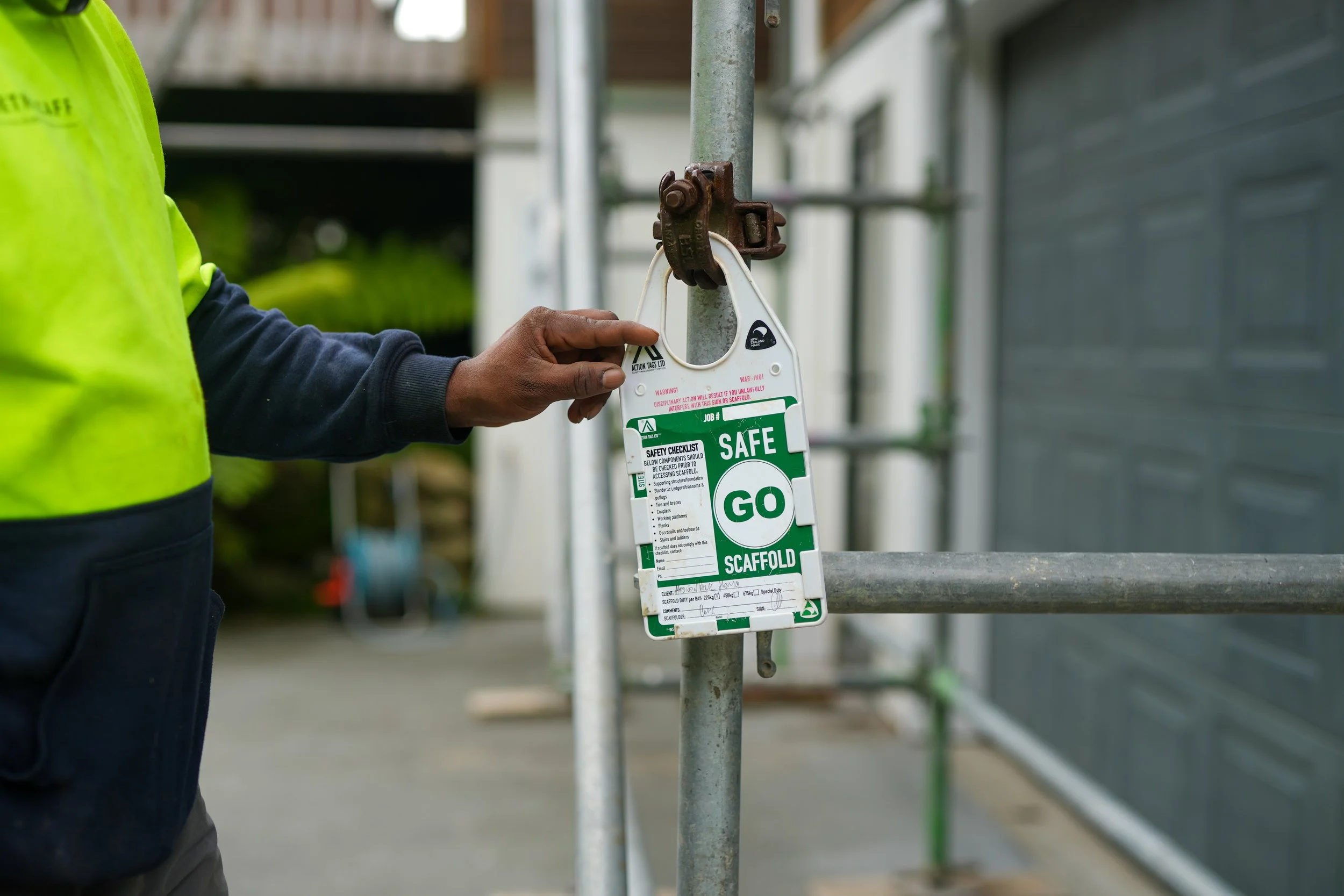
If you've got scaffolding up on your property or job site, you've probably noticed a tag hanging near the access point covered in ticks, dates, and initials. That's not paperwork for the sake of it, it's the record of one of the most important parts of any scaffolding job: the inspection.
Here's what actually happens, how often it needs to happen, and why it matters for you.
Before it's even handed over
Every scaffold gets checked before it's signed off as ready to use. Once our crew finishes the build, we go over it properly, checking the foundations, ties, bracing, platforms, edge protection, the lot, to make sure it matches the plan and meets the relevant AS/NZS scaffolding standards. Nothing gets used until it passes this first check.
Weekly, at minimum
From there, scaffolding needs a full inspection at least every 7 days for as long as it's standing. This isn't optional. It's a legal requirement under WorkSafe NZ's rules for working at height, and it's carried out by someone trained and competent to spot problems: loose fittings, missing boards, rust, damaged components, anything that's shifted or been tampered with. If scaffolding is below 5m high, a highly competent scaffolder can fulfill these inspection requirements. If the scaffolding is over 5m, a certified scaffolder needs to inspect the scaffolding.
After weather or changes
Two other triggers bring the inspector back out regardless of where things sit in the weekly cycle:
Bad weather: Auckland doesn't hold back - high wind, heavy rain, storms. Any of that means a scaffold gets re-checked before anyone goes back up, because conditions can loosen fittings or shift components even if nothing looks obviously wrong from the ground.
Any alteration: If a scaffold is adjusted, extended, or partially dismantled and rebuilt for a different stage of the job, that's treated as a fresh install for inspection purposes. It gets checked again before it's used.
The tag tells the story
Every scaffold has a tag at its access point, and it's the quickest way for anyone on site (your crew, your builder, you) to know whether it's currently safe to use. It's updated at every inspection with the date and the inspector's sign-off. If a scaffold doesn't pass, it comes out of service straight away and can't be used again until whatever's wrong has been fixed. No exceptions, no "it'll probably be fine."
Why this matters for you
You don't need to know the standards inside and out. That's what you're paying a certified scaffolding company for. But it's worth understanding the rhythm of it, because:
It explains why our crew shows up during your project, even when they're not actively building or dismantling anything. That's often a scheduled inspection, not wasted time.
It's your safety net too. Falls from height are behind close to half of all serious harm incidents in construction. Regular inspections are the single biggest reason scaffolding stays as safe on day 30 as it was on day one.
It protects your project timeline. Catching a loose coupler or a shifted board early means a five-minute fix, not a delay while something bigger gets sorted out.
Our approach at Metroscaff
Inspections aren't an add-on for us, they're built into how we run every job. Our crews are trained to check their own work as they go, and every scaffold we erect gets the sign-off, tagging, and weekly follow-up it needs for as long as it's on your site.
If you've ever wondered what that tag on the scaffold actually means, now you know. It's your assurance that someone's checked it, recently, and it's good to go.