
WorkSafe focusing on residential building sites to assess the management of working at heights and fall risks.
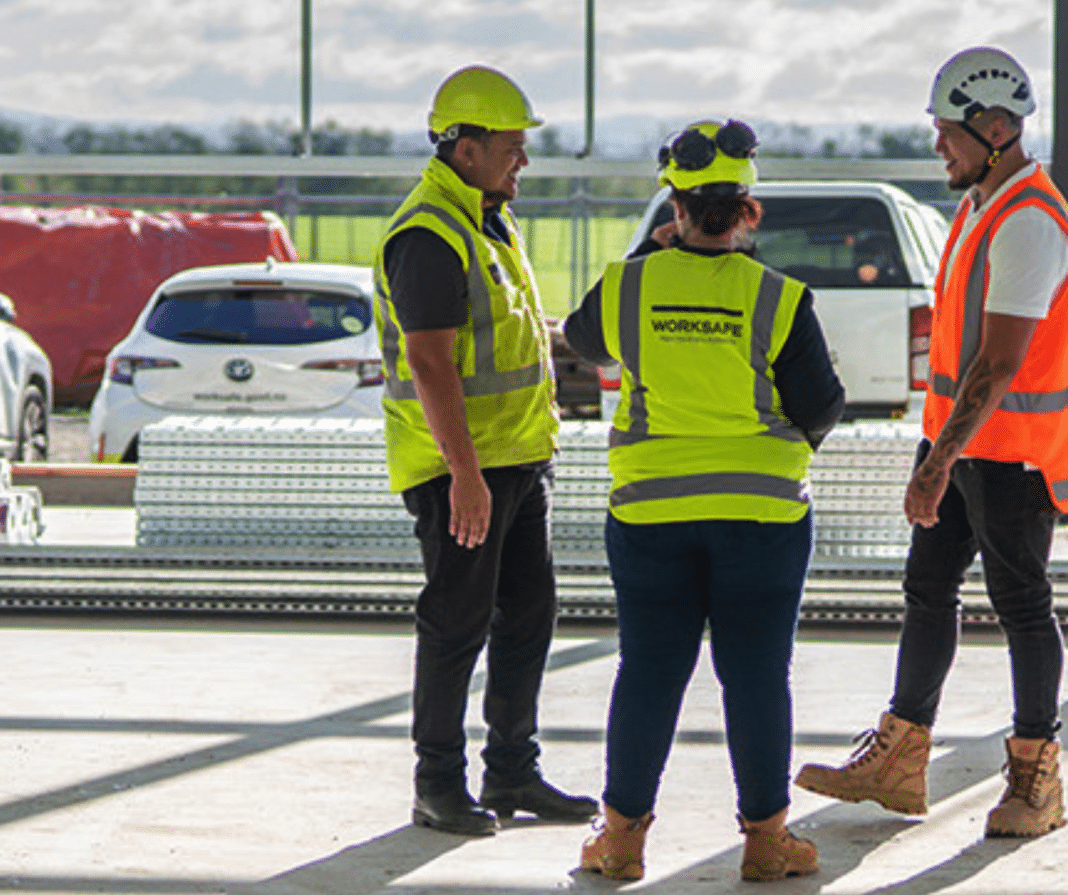
Image source: © WorkSafe New Zealand
From October to December 2026, WorkSafe inspectors are visiting residential construction sites across New Zealand to check how the risk of falling from height is being managed. If you are building, renovating, roofing or painting a house in the next three months, here is what that means for your site and where good scaffolding fits in.
What WorkSafe has announced
On 2 October 2026, WorkSafe New Zealand said its health and safety inspectors will proactively visit residential construction sites around the country over the next three months. The visits have one focus: how the risk of falling while working at height is being managed.
WorkSafe describes these as assessment visits. The aim is to engage with and educate residential builders, including on their responsibilities for subcontractors and tradespeople, and to feed what inspectors see back to the industry.
That does not make them a formality. WorkSafe has been clear it will take action where serious risks are not being managed.
The numbers behind it
Falls from height are a well-known risk, and they keep happening. WorkSafe's figures:
Each year on average, falls from height cause 4 deaths, 100 serious injuries and around 1,000 injuries that need more than a week off work.
Around 40% of falls from height happen in construction.
Ladders are involved in about 40% of fall-from-height injuries in construction.
Falls from or through a building are the most common cause of fatal or very serious injuries, such as spinal fractures and head injuries.
Over the past two years, about 45% of enforcement notices and 70% of prohibition notices in construction were about the risk of falls from height.
A prohibition notice stops the work until the problem is fixed. In August, an Auckland company was fined after carrying on work on a residential site despite one. That site had workers near an unprotected edge, temporary platforms, partially removed scaffolding, and non-compliant, unsecured ladders.
What inspectors will be looking for
WorkSafe Area Manager Barney Hoskins says inspectors want to see that businesses have identified where workers could fall from height and put effective controls in place to stop it happening. In practice, that comes down to four things:
The hazards have been identified. Someone has walked the job and worked out where a person could fall: roof edges, upper-storey openings, stairwells, fragile roofing.
The risk has been assessed. How far is the fall, who is exposed, and for how long.
The right equipment has been chosen for the task. Not whatever happened to be on the truck.
It is being used correctly. And it stays that way as the job changes.
That last point matters on a house build. Sites change week to week and several trades share the same access. WorkSafe singles out communication and co-ordinated planning between trades as critical to keeping controls effective for the whole project, not just on the day they go up.
The five-minute job myth
WorkSafe calls out one myth in particular: that fall protection can be relaxed for a quick job. It cannot. Whether the task takes five minutes or five hours, if someone could fall, appropriate controls have to be considered and put in place.
This is where a lot of residential injuries come from. Nobody plans to work unsafely on a full re-roof. It is the gutter fix, the one sheet of cladding, the quick look at a flashing from a ladder that was only meant for access.
WorkSafe has also updated its Working at height in New Zealand good practice guidelines. The new version reflects the Health and Safety at Work Act, covers current notification requirements, and adds content on risk management, safety decking and worker engagement. It is worth a read before your next job is priced.
How Metroscaff can help
Properly erected scaffold takes the biggest fall risks on a house off the table. It gives every trade a stable working platform with edge protection, so nobody is doing the job from a ladder. Here is how we help builders and homeowners across Rodney and the North Shore get that right.
Plan it before the job starts. Tell us what is being built and which trades need access, and we will set up the scaffold to suit the work rather than leaving your crew to work around it.
Built by qualified scaffolders. Your scaffold is erected, altered and dismantled by people trained to do it, and handed over ready to use.
Inspected and tagged. Our own scaffold inspector checks our scaffolds, and the tag at the access point tells everyone on site whether it is safe to use.
Changed properly when the job changes. If the roofer needs a lift raised or the cladder needs a tie moved, call us. Partially removed scaffolding was one of the problems on the Auckland site that was fined in August.
Close by. With yards in Warkworth and Silverdale, we can get to most local sites quickly when something needs adjusting.
Our own house in order. Metroscaff holds 100% Gold in its latest Sitewise assessment, so you are bringing a contractor on site whose health and safety systems have been independently checked.
If you are not sure whether a job needs scaffolding, ask. A short conversation at quoting stage costs a lot less than a stopped site.
A quick site check before the inspector turns up
Walk your site this week and ask:
Has every place someone could fall been identified, including short jobs and one-off tasks?
Is there a working platform with edge protection wherever people are working at height?
Are ladders being used for access only, and are they secured?
Is the scaffold tag current, and does everyone know to check it?
Has anyone other than the scaffolder moved planks, ties or guardrails?
Do all the trades on site know the plan, and who to call if the scaffold needs changing?
If any of those answers is a no, sort it now. To talk through scaffolding for an upcoming build or renovation, get in touch with the team by calling us on 021 774 653 or emailing at sales@metroscaff.co.nz
Sources
WorkSafe's focus on residential construction sites aims to prevent falls from height, WorkSafe New Zealand, 2 October 2026
Company falls short after ignoring WorkSafe notice, WorkSafe New Zealand
Working at height in New Zealand, WorkSafe New Zealand good practice guidelines