
Painting or renovating this Summer?
Summer is when the rollers come out. The days are longer, the weather's more settled, and homeowners across Rodney, the North Shore, and the greater Auckland region finally tackle the weatherboards, the peeling fascias and the reno they've been putting off all winter. For painting companies, it's the busiest stretch of the year.
It's also when we hear the same question most often: “Do we really need scaffolding, or can we get by on ladders?”
For most two-storey jobs, and plenty of single-storey ones, scaffolding is the better call. Here's why.
1. The job gets done faster
Ladders are slow. Every few metres, someone has to climb down, move the ladder, re-set it, carry the gear back up and start again. Across a whole house, those minutes add up to days.
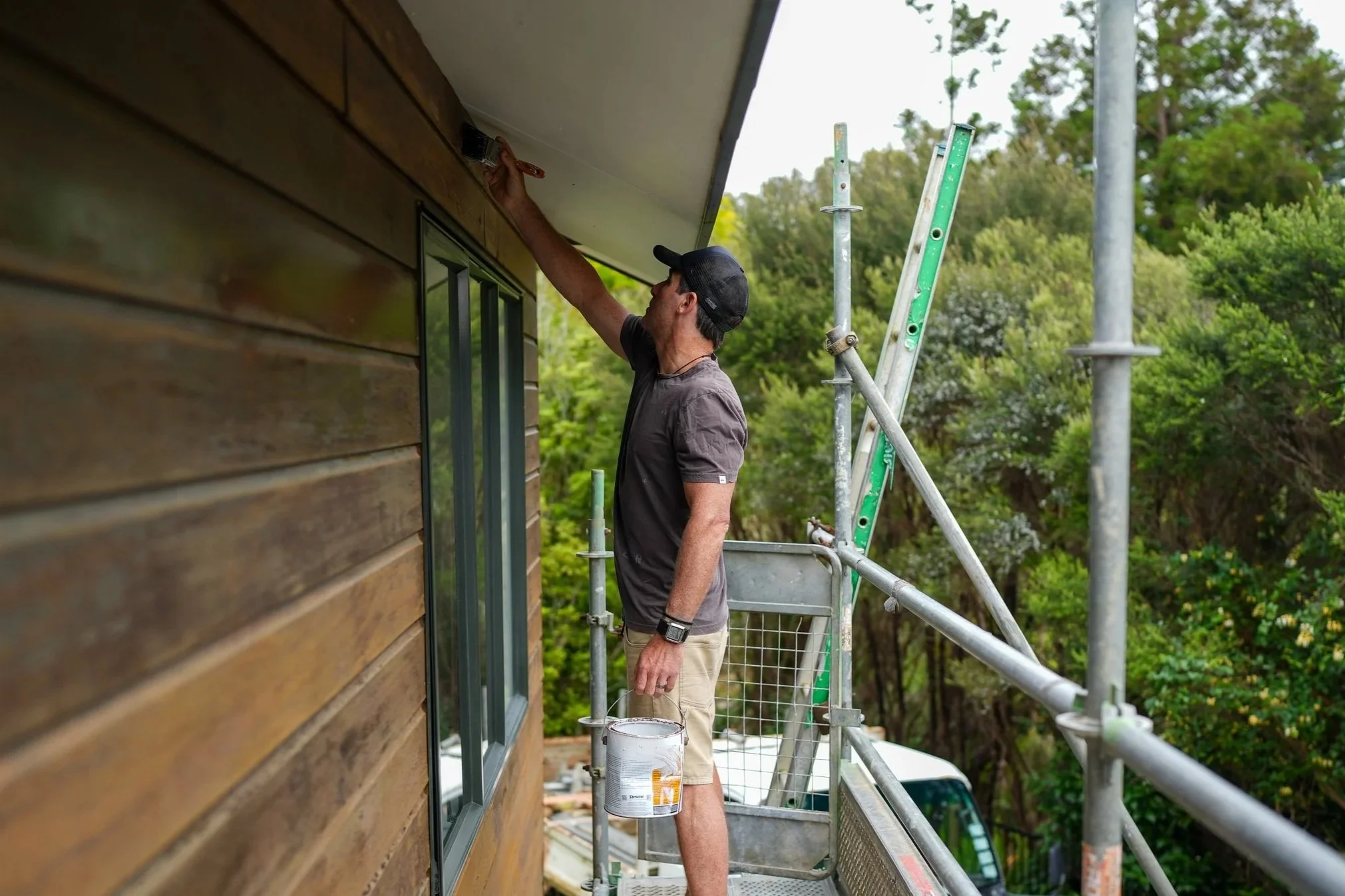
With scaffolding, your painters or builders have a continuous working platform along the full length of the wall. Paint, tools and materials sit right beside them. They can prep, sand, prime and topcoat in long, steady runs instead of short bursts, and more than one person can work at height at the same time.
Faster work means less time on the clock, and less time for the weather to catch you out mid-job.
2. Faster usually means cheaper
This is the bit that surprises people. Scaffolding is an extra line on the quote, so it's easy to assume it makes the job more expensive. In practice it often does the opposite.
Labour is usually the biggest cost in any painting or renovation job. When trades spend less time repositioning ladders and more time actually working, the labour hours drop. On many houses, the time saved offsets a good chunk of the hire cost, and sometimes all of it.
There's a quality payoff too. Work done from a stable platform tends to be better work: cleaner cut-ins, properly prepped surfaces, no missed patches behind the ladder. Doing it right the first time is always cheaper than coming back to fix it.
3. It's easier and more comfortable to work from
Anyone who's spent a day on a ladder knows it's hard on the body. You're balancing, stretching and holding on with one hand while trying to do careful work with the other.
A scaffold platform lets people stand properly, move freely and keep both hands on the job. That makes a real difference to fatigue across a long summer day, and it's much easier to reach tricky spots like eaves, gutters, gable ends and window frames.
For homeowners, it also means less disruption. Trades aren't trampling garden beds to reposition ladders, and the job moves along in a predictable way.
4. It keeps everyone safe
Falls from height are one of the most common causes of serious injury on New Zealand worksites, and many of them happen at heights people don't think of as dangerous. A fall from a ladder while painting a single-storey eave can still end in a broken back.
Properly erected scaffolding, with guardrails, toe boards and a solid working platform, removes most of that risk. It also protects people on the ground from dropped tools and materials, which matters when you've got kids, pets or neighbours around over the summer holidays.
5. It's the lawful way to do it
For painting companies and trades: under the Health and Safety at Work Act 2015, you have a duty to manage the risk of falls for your workers, and there's no "safe height" below which that duty disappears. WorkSafe expects fall risks to be eliminated where possible, and minimised where not, with the most effective controls available. Ladders are generally meant for short-duration, light work, not for painting an entire house. Scaffolding is one of the clearest ways to show you've done what's reasonably practicable.
Where a person could fall 5 metres or more, scaffolding must be erected, altered and dismantled by a certified scaffolder. Using a professional scaffolding company takes that off your plate, and gives you inspected, tagged scaffold your crew can trust.
For homeowners: if you're hiring trades, choosing a painter who builds scaffolding into their quote is a good sign they take safety, and their legal obligations, seriously. Be wary of a quote that looks cheaper because it skips the access equipment. And if you're tackling the job yourself, the risk of falling is exactly the same as it is for a professional.
Plan ahead for summer
Summer is peak season for scaffolding as well as painting, so it pays to book early. If you're a homeowner, talk to your painter about access when you get your quote. If you're a painting company with a full summer schedule, getting your scaffolding lined up now means your crews can move from job to job without waiting around.
At Metroscaff, we supply and erect scaffolding for homes and trades across Auckland, from the Rodney District and the North Shore, to West Auckland and South Auckland, based from our yards in Snells Beach and Silverdale. We're proud to be SiteWise 100% Gold certified, so you can be confident safety is our priority on every job, big or small. We have certified scaffolders, and every scaffold is inspected and tagged, so you can get on with the work.